IELTS.international

Best Netflix Shows for IELTS Preparation

Netflix can be one of the most effective supplementary tools in your IELTS preparation — if you use it strategically. The right shows expose you to clear pronunciation, diverse accents (especially British, Australian, and Commonwealth varieties), academic vocabulary, and topics that frequently appear in the Speaking and Writing sections.

This guide pairs curated show recommendations with active watching strategies so every episode you watch moves you closer to your target band score. Ready to turn screen time into study time? Sign up for free IELTS tips and start tracking your progress today.

Start Preparing for Free

Why Netflix Works for IELTS Preparation

Unlike textbooks, Netflix gives you natural English spoken at real speed, with real emotion, in real contexts. This exposure trains your ear for connected speech — the way native speakers link, reduce, and blend words together — which is exactly what the IELTS Listening test demands. Shows also provide a constant stream of vocabulary in context, making new words far easier to remember than isolated flashcard lists. When you choose shows aligned with common IELTS topics like technology, environment, work, and travel, you simultaneously build topic knowledge and the language to discuss it. The result: stronger Speaking Part 2 and 3 responses, richer Writing Task 2 arguments, and sharper listening comprehension across all four Listening sections.

British English Shows Every IELTS Candidate Should Watch

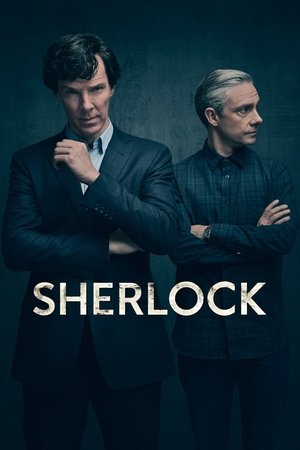
Since IELTS Listening heavily features British, Australian, and Commonwealth accents, British English content deserves priority in your watching schedule. The Crown is the gold standard: Queen Elizabeth II's speeches model structured, grammatically precise Received Pronunciation (RP) at a moderate pace with minimal overlapping dialogue. Political vocabulary like 'abdication,' 'truce,' and 'coup' appears naturally. Sherlock (BBC) introduces the same RP accent at a faster pace — Benedict Cumberbatch's rapid deduction sequences build your ability to follow connected speech under pressure, a critical IELTS Listening skill. For regional accent exposure, Broadchurch offers West Country English at a gentler pace, while Peaky Blinders challenges advanced learners with strong Birmingham dialect. The Great British Bake Off is ideal for intermediate learners: clear regional accents, sequential process language ('first,' 'next,' 'finally'), and everyday vocabulary make it perfect practice for Speaking Parts 1 and 2. Criminal: UK mirrors IELTS Listening Sections 1 and 3 with its question-and-answer interrogation format — practise taking notes on names, times, and key details as you watch.

Documentaries That Build Academic Vocabulary

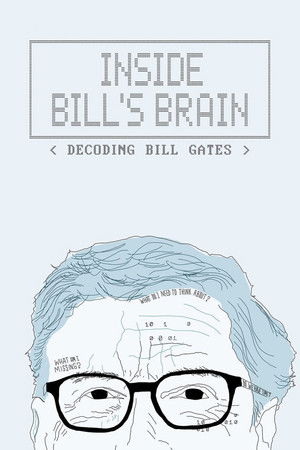
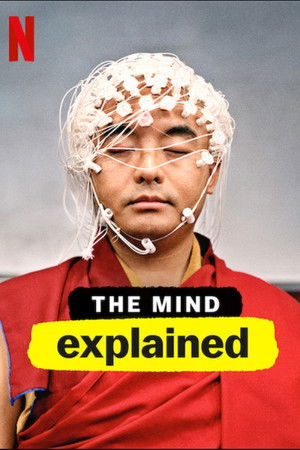
Documentaries are particularly effective for IELTS because they use formal narration, academic vocabulary, and structured argumentation — all directly transferable to Writing Task 2 and Speaking Parts 2 and 3. Our Planet, narrated by David Attenborough, is the most commonly referenced documentary in IELTS Speaking Part 2 responses about nature. The narration uses clear, formal English with scientific terminology and frequent passive voice constructions ('The forest is being destroyed at an alarming rate') — exactly the register needed for Band 7+ academic writing. Explained (Vox) covers technology, culture, and science in 15-25 minute episodes, making each one a ready-made source of ideas and examples for common IELTS essay topics. Watch an episode, note 3-4 main arguments, and use them in a practice essay. Dirty Money investigates business scandals using the same problem-evidence-consequences structure that mirrors an IELTS problem-solution essay. Inside Bill's Brain feels like an extended IELTS Listening Section 4 lecture — great for note-taking practice on main ideas and supporting details.

Shows That Cover Common IELTS Speaking Topics

IELTS Speaking frequently tests themes like technology, travel, environment, work, and relationships. Matching your Netflix choices to these topics gives you both vocabulary and ideas. For technology and the future, Black Mirror provides high-level arguments about ethics, AI, and social media — perfect for Speaking Part 3 questions like 'How has technology changed the way people communicate?' Focus on how characters express hopes and fears about inventions, and practise conditional sentences ('If this technology were to become widespread...'). For travel and culture, Dark Tourist introduces descriptive language about unusual places and experiences, while Somebody Feed Phil offers accessible food and culture vocabulary. For work and professional life, Suits builds business English through fast persuasive dialogue and negotiation scenes. Emily in Paris is a goldmine for modern workplace phrases like 'circle back,' 'let us pivot,' and marketing terminology. For daily life and relationships, Friends remains the clearest example of functional conversational English — perfect for mastering the 200 most common phrasal verbs. Modern Family demonstrates how different generations talk about family, parenting, and daily routines.

Crime and Mystery Shows for Detail-Focused Listening

Crime shows are excellent for building your ability to listen for specific details — names, dates, locations, and physical descriptions — which is exactly what IELTS Listening Sections 1 and 2 require. Sherlock combines RP British English with deduction vocabulary ('hypothesis,' 'forensics,' 'reasoning') and trains you to follow rapid logical explanations. Luther layers emotional intensity over London English — fast-paced dialogue that builds listening stamina for advanced learners. For intermediate learners, Broadchurch offers mystery vocabulary at a slower pace with a distinct West Country accent, while Criminal: UK provides a format that directly mirrors IELTS question-and-answer patterns. Mindhunter delivers slow, deliberate dialogue mixed with intense FBI interviews — ideal for psychology vocabulary and listening for nuance. Try this exercise with any crime show: pause after a key scene and write down every detail you caught — suspect description, location, time, motive — then rewind to check your accuracy.

Comedy Shows for Understanding Tone, Sarcasm, and Culture

Understanding humour, sarcasm, and tone demonstrates high-level English proficiency — and these skills matter in IELTS Speaking where examiners assess your ability to communicate naturally. Brooklyn Nine-Nine features fast-paced group conversations where characters joke, interrupt, and use sarcasm constantly — excellent for understanding how natural dialogue flows. The Office (UK) introduces British dry wit and awkward silence as comedy tools, while the US version shows American workplace humour — comparing both builds cultural awareness, a common IELTS discussion topic. Fleabag delivers complex, fast British dialogue for advanced learners, while Schitt's Creek offers clear Canadian English with heartwarming family dynamics. The Good Place stands out for IELTS preparation: it builds vocabulary for abstract concepts like ethics and morality, which directly prepares you for Speaking Part 3 questions about societal values and philosophical ideas.

The Subtitle Progression Method

Passive binge-watching will not improve your IELTS score. Research from Universitat Pompeu Fabra in Barcelona shows that students significantly improve English comprehension by watching shows with a structured subtitle approach. Here is the method: First viewing — watch with English subtitles on. Connect the spoken language with written words. Pause to notice how pronunciation differs from spelling ('want to' becomes 'wanna,' 'going to' becomes 'gonna'). Second viewing — turn subtitles off entirely. Take notes on what you miss and replay those sections with subtitles to fill gaps. Third pass — replay key moments with English subtitles, shadow-read by speaking along with the actors, and note new vocabulary. For upper-intermediate and advanced learners, watching without subtitles is recommended even when you only understand 70-80 percent — this builds your ability to use context clues, a critical IELTS Listening skill. Browser extensions like Language Reactor show dual-language subtitles and let you hover over words for definitions, turning Netflix into an active language-learning platform.

Active Watching Techniques That Actually Work

Shadowing is the single most effective Netflix technique for IELTS Speaking. Pause after each sentence and repeat it out loud, matching the actor's rhythm, stress, and intonation. Record yourself and compare. This builds pronunciation accuracy, fluency, and the muscle memory needed for confident speaking. Vocabulary journaling transforms passive entertainment into active learning: write down 5-10 new words or phrases per episode, include the full sentence from the show, note its context, and write your own original sentence using the word. This moves vocabulary from recognition to production. Set listening goals before each episode — 'identify 10 idioms,' 'notice how speakers use fillers like well or you know to buy thinking time,' or 'count how many times the passive voice is used.' Transcribe short 30-second clips and check your accuracy against subtitles — this intensive listening exercise builds your ability to hear individual words in connected speech. Limit focused viewing sessions to 30-45 minutes. Your brain needs to be actively engaged for learning to stick — quality always beats quantity.

Recommended Shows by Your Current IELTS Level

If you are currently at Band 5-5.5, start with Friends, Brooklyn Nine-Nine, Young Sheldon, and The Great British Bake Off. Use English audio with English subtitles. Focus on everyday vocabulary and sentence patterns. Watch each episode twice and keep a simple vocabulary notebook. At Band 6-6.5, move to The Crown, Sherlock (with subtitles initially), Explained, Modern Family, Criminal: UK, and Our Planet. Challenge yourself with subtitle-free segments of 10-15 minutes. Begin vocabulary journaling and try shadowing short dialogues. For Band 7 and above, watch Black Mirror, Peaky Blinders, Suits, Dirty Money, Fleabag, and The Good Place without subtitles. Shadow entire scenes. Journal academic vocabulary and complex grammatical structures. Use show arguments as springboards for your own speaking and writing practice. Transcribe challenging 30-second clips to build advanced listening precision.

Your 30-Day Netflix IELTS Challenge

Week 1 — Everyday English Foundation: Watch Friends or Brooklyn Nine-Nine for 30 minutes daily with English subtitles. Goal: collect 50 common phrases and phrasal verbs in your journal. Week 2 — British Accent Training: Switch to The Crown or The Great British Bake Off. Watch 30 minutes daily, first with subtitles then without. Goal: noticeably improve your British English comprehension. Week 3 — Academic Vocabulary Building: Watch Explained, Our Planet, or Dirty Money for 30 minutes daily while actively journaling vocabulary. Goal: learn 50 academic words and use each one in an original sentence. Week 4 — Advanced Listening Challenge: Watch Sherlock or Black Mirror for 30 minutes daily with no subtitles and full shadowing practice. Goal: build listening stamina for fast, complex speech. Remember the balance rule: Netflix supplements structured IELTS practice — it does not replace it. Combine daily Netflix sessions with weekly full-length mock tests and official IELTS materials for the fastest score improvement.

Shows Mentioned in This Guide

Related pages

Get Free IELTS Prep Tips & Score Strategies

Join 10,000+ IELTS students. Weekly tips for Listening, Reading, Writing & Speaking — straight to your inbox.